Adult Toy Cleaner vs Soap: What to Check
A practical buyer-safety guide for shoppers comparing adult toy cleaner, cleaning spray, wipes, and mild soap without exaggerated hygiene or medical claims.
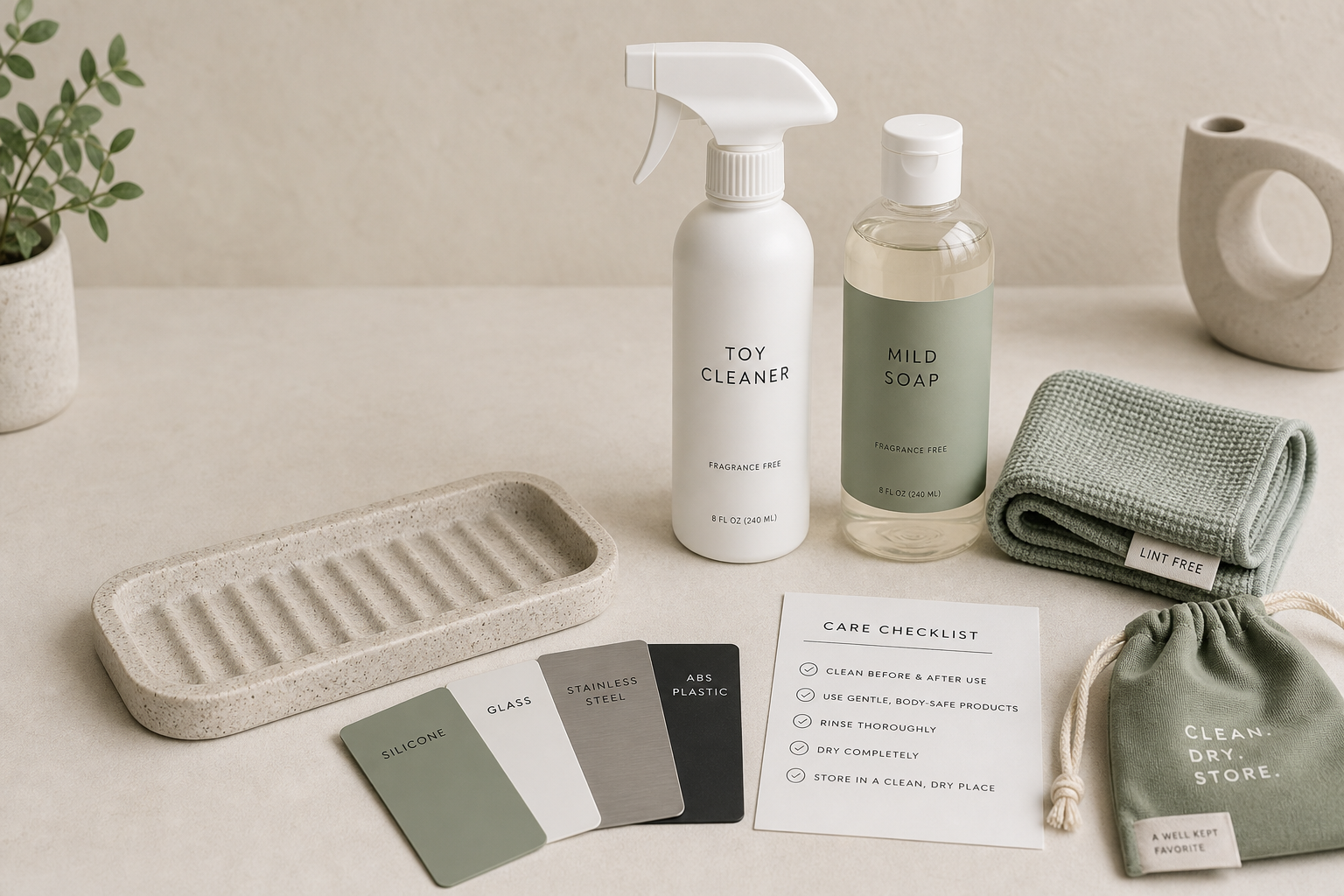
Quick Answer
Adult toy cleaner can be useful, but it is not automatically safer or more effective than mild soap. Read the toy instructions first, then read the cleaner label. If the item has motors, seams, charging contacts, porous materials, or unclear material claims, avoid harsh cleaners and choose the method the manufacturer actually supports.
Why shoppers compare cleaner, spray, wipes, and soap
People searching for adult toy cleaner usually want a simple answer: what should I buy so cleanup feels private, easy, and safe? The honest answer is that cleaning products are not interchangeable. A water-resistant silicone item, a textured sleeve, a glass product, and an electronic massager may need different handling. A cleaner spray may be convenient at the sink, but convenience does not matter if it leaves residue, damages a finish, or gets into a charging port.
Mild soap and water is often the simplest routine when the product instructions allow it. A dedicated cleaner may be useful for travel, quick cleanup before a deeper wash, or shoppers who want a clearly labeled care product. Wipes may help with portability, but they can dry out, leave residue, or miss textured areas. The practical goal is not to buy the strongest product. It is to choose a method that matches the material and can be repeated without confusion.
Start with the toy, not the cleaner
The toy’s care instructions outrank the cleaner’s marketing copy. Check whether the item is waterproof, water-resistant, splashproof, or not safe to rinse. Look for the body-contact material, whether the item has a motor, whether the charging point is sealed, and whether heat or boiling is prohibited. Waterproof and water-resistant are not the same promise. A toy that can handle a quick rinse may not be safe for soaking.
If the toy page says to use mild soap only, do that. If it recommends a specific cleaner type, compare ingredients and directions. If it provides no cleaning instructions at all, that is a product-quality issue. A private adult store should be able to explain care without awkwardness or vague claims.
Read cleaner labels like a cautious buyer
FDA cosmetics-labeling resources are useful because they reinforce a basic shopping habit: labels should be understandable. For toy cleaners, look for ingredient transparency, body-contact directions, rinse instructions, warnings, and storage instructions. Avoid products that make broad medical promises, imply they prevent infections, or use vague phrases such as hospital-grade clean without explaining appropriate use.
EPA disinfectant guidance is also a reminder that disinfectants are not magic sprays. Many need wet contact time, ventilation, and specific surfaces. That does not mean a household disinfectant belongs on an intimate product. Unless the toy maker and cleaner label both support that use, stay with a milder approved method.
Sprays, foams, wipes, and mild soap: practical differences
Sprays are easy to apply but can run into seams or buttons. Foams may cling better but still need directions. Wipes are portable, but one wipe may not reach textured grooves. Mild soap and water can be inexpensive and thorough, but only when rinsing is allowed and drying is possible. A lint-free cloth helps with drying because damp storage can lead to odor, lint, and surface problems.
For sleeves or textured items, pay attention to drying. A product can look clean while moisture remains inside. For glass or stainless steel without electronics, cleaning may be more straightforward, but you still need to avoid chips, cracks, and harsh cleaners that leave residue. For silicone products, avoid assuming every cleaner is compatible; the material and finish can vary.
Red Flags / when to slow down before checkout
Slow down if a cleaner says it works on every adult product without naming materials, rinse instructions, or warnings. Be cautious with listings that promise medical protection, guaranteed infection prevention, or therapeutic outcomes. Avoid cleaners with no ingredient list, no support contact, or reviews mentioning burning, sticky residue, strong odor, or damaged surfaces.
Also pause if a toy listing pushes a cleaner add-on but does not explain the toy’s own cleaning needs. FTC online shopping guidance applies here: understand the seller, return limits, billing privacy, and what you are actually buying before checkout.
Care checklist
| Step | Better habit | Caution sign |
|---|---|---|
| Instructions | Toy and cleaner labels agree | Cleaner marketing conflicts with toy care |
| Electronics | Ports and seams are protected | Spray runs into controls |
| Residue | Rinse or wipe as directed | Sticky or scented film remains |
| Storage | Fully dry before pouch or box | Damp storage or lint buildup |
FAQ
Is adult toy cleaner better than soap?
Not always. A cleaner can be convenient, but a mild soap and water routine may be enough when the toy maker allows it. The right answer depends on material, electronics, seams, and the product label.
Can I use disinfecting household cleaners on toys?
Do not use household disinfectants unless the toy maker specifically approves them for body-contact surfaces. Many products need careful contact times and rinsing and may not be suitable for intimate items.
Are toy cleaner sprays and wipes the same?
No. Sprays, foams, and wipes can have different ingredients, contact instructions, and residue. Read the directions and avoid assuming one format cleans like another.
Do cleaners replace drying and storage?
No. Cleaning is only one step. Drying fully and storing the item away from dust, heat, and incompatible materials helps protect the surface.
What if the product label is vague?
Choose a clearer product or contact support. Vague labels are a red flag when the item touches the body.
References and useful sources
Shop and learn next
Useful product or support links:
Related ShopLovaNest guides: