Body-Safe Glass Toys: Material Guide
A practical guide to body-safe glass toy materials, borosilicate claims, smooth finishing, cleaning, temperature caution, storage, and checkout red flags.
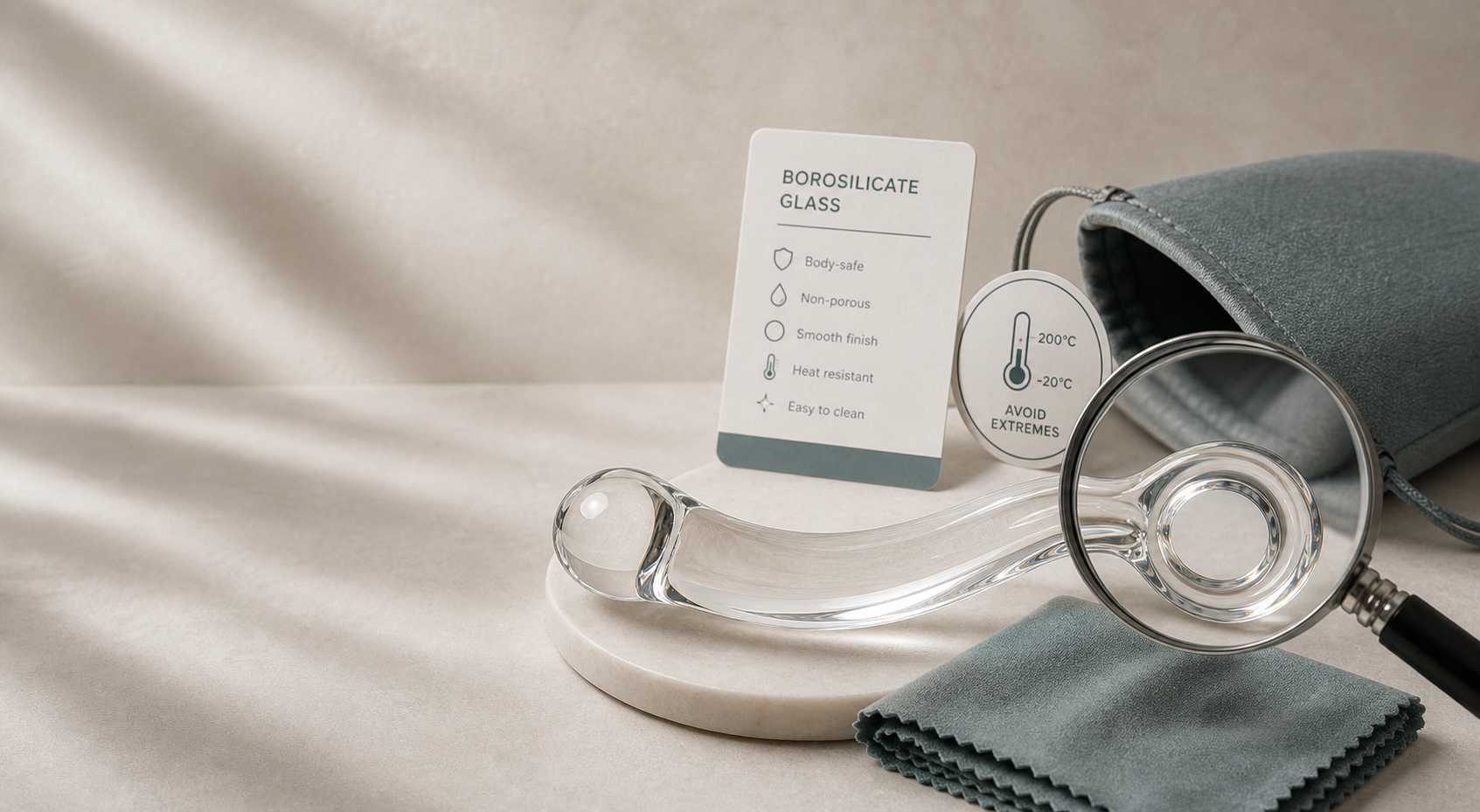
Quick Answer
Body-safe glass toys are usually valued because finished glass can be nonporous, smooth, firm, and easy to clean. The safest purchase is not just “glass”; it is a clearly described product with polished edges, no chips or cracks, sensible temperature guidance, storage protection, and a support contact. If the seller does not identify the material or show care instructions, slow down.
Glass material claims need plain explanations
People searching what body-safe glass toys are made of are usually trying to separate a safe material claim from a vague marketing phrase. Many reputable glass products use borosilicate glass because it is known for durability and temperature resistance in controlled uses. Some products may use other glass types. The key is that the seller should say what the product is made of and how it is finished.
Glass can be nonporous, which means it does not absorb moisture the way some soft materials can. That makes cleaning more straightforward when the surface is intact. But nonporous does not mean indestructible, and it does not excuse poor finishing. Smoothness, shape, weight, and inspection matter.
Finish quality matters as much as the material name
A glass product should feel uniformly smooth. Edges, tips, curves, and decorative areas should not have rough spots. Colored sections should not flake. Any seam, raised texture, or handle area should be easy to inspect and clean. Bright light and a clean fingertip inspection can reveal damage that a quick product photo does not show.
Do not use a product with chips, cracks, sharp edges, cloudy stress marks, loose coating, or a rough surface. CPSC reporting resources exist for consumer safety concerns, but the immediate personal rule is simple: if the glass is damaged or questionable, stop using it.
Cleaning glass without adding new problems
Cleaning instructions vary, so start with the manufacturer’s directions. Many smooth non-motorized glass products can be washed carefully with mild soap and water, then rinsed and dried completely. Avoid abrasive scrubbers that can scratch decorative finishes. Avoid harsh household chemicals unless the maker specifically allows them.
Drying and storage are part of cleaning. A clean glass product can still be damaged if it knocks against hard objects in a drawer. Use a padded pouch or dedicated box. Keep it separate from chargers, metal items, textured products, and anything that could chip the surface.
Temperature play requires extra caution
Glass is often marketed with warming or cooling language, but temperature should stay gentle. Avoid boiling water, microwaves, ovens, freezing, open flame, or sudden hot-to-cold changes. Extreme temperatures can damage skin, stress the material, or make the product unsafe to handle. If a seller focuses on dramatic temperature claims but gives no safe range or instructions, consider that a red flag.
A cautious approach is better than a sensational one: mild warm water, room-temperature storage, and slow changes only when the product instructions allow them.
Red Flags / when to slow down before checkout
Pause if a listing only says “body safe glass” but does not identify the material, cleaning method, finish quality, or inspection guidance. Slow down if photos hide edges, reviews mention chips, the return policy is unclear, or the seller makes medical or unsupported outcome claims.
Also be skeptical of extremely low prices with no seller accountability. FTC online-shopping guidance applies here: know the seller, read policies, and look for clear support before paying.
Glass buyer checklist
| Detail | Better sign | Caution sign |
|---|---|---|
| Material | Specific glass type named | Only says “premium glass” |
| Finish | Smooth polished edges described | Edges hidden in photos |
| Care | Cleaning and storage steps included | No care instructions |
| Temperature | Gentle limits explained | Extreme claims |
FAQ
What are body-safe glass toys usually made of?
Many reputable products use borosilicate glass or another nonporous glass designed for smooth finished surfaces. The seller should identify the material clearly.
Is glass automatically body-safe?
No. Material, finishing, design, inspection, and cleaning instructions matter. A chipped, cracked, rough, or poorly described glass product should not be used.
How do I inspect a glass toy before use?
Check under bright light for chips, cracks, rough seams, sharp edges, cloudy damage, or loose decorative coatings. Stop if anything feels imperfect.
Can glass toys be used with lube?
Many glass products are compatible with water-based lubricant, but always follow the product instructions and choose body-safe formulas.
Can I heat or cool glass toys?
Only gently and only according to the manufacturer’s instructions. Avoid sudden temperature changes, extreme heat, freezing, or anything that could damage skin or glass.
References and useful sources
Shop and learn next
Useful product or support links:
Related ShopLovaNest guides: