Silicone Lube Spray: Label and Compatibility Guide
Compare silicone lube spray by ingredients, toy compatibility, condom notes, cleanup, slip level, packaging privacy, and red flags.
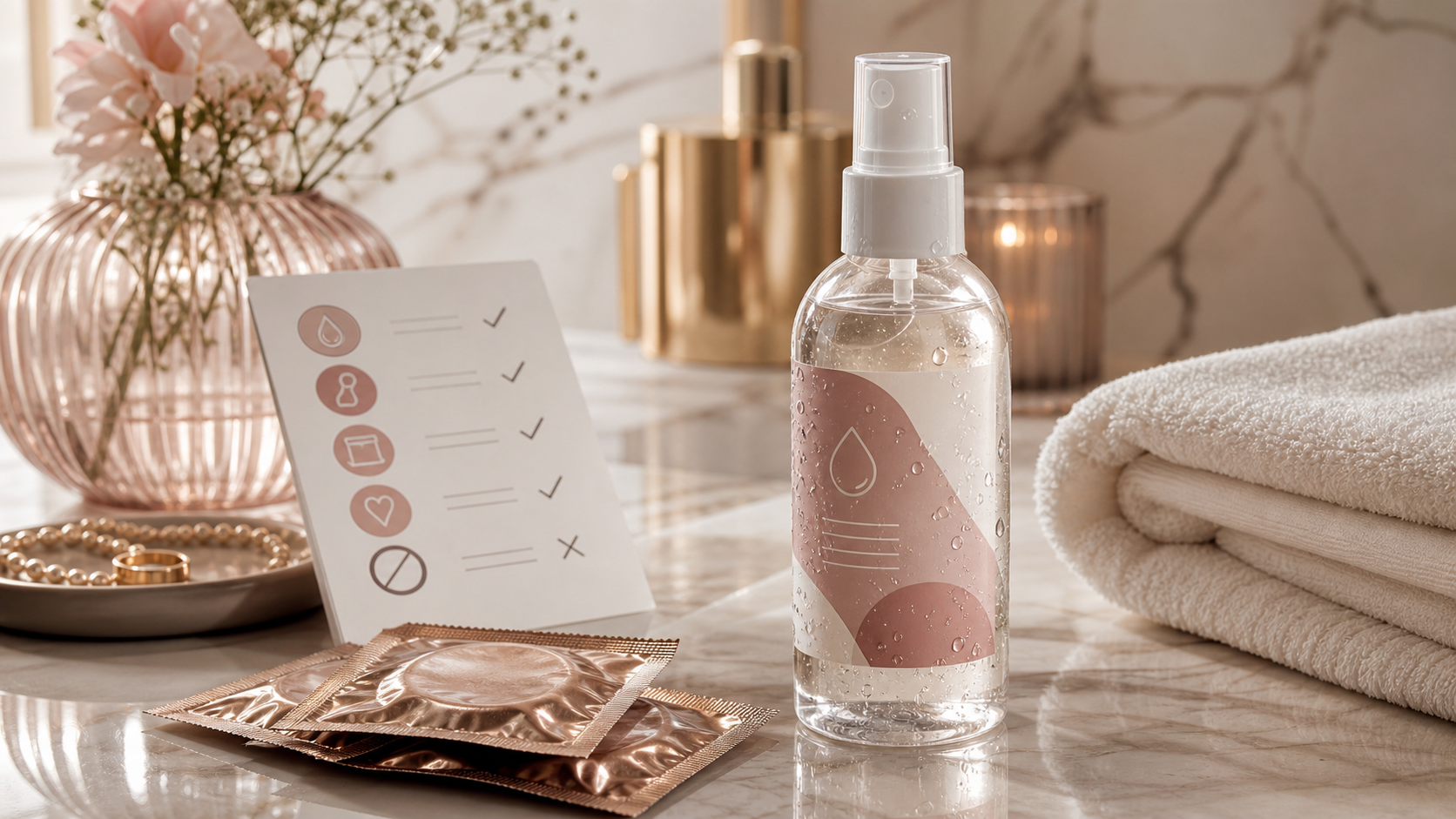
Quick Answer
Silicone lube spray is mainly a convenience format: it can apply a thin, even layer, but the spray bottle does not make the formula safer or more compatible. Buy it only when the label clearly explains ingredients, condom notes, toy-material limits, cleanup, and packaging privacy. If you use silicone toys, verify compatibility before applying it.
What the spray format changes
Silicone lube spray attracts shoppers who want less mess, easier reapplication, or a lighter layer than a squeeze bottle. That can be helpful, but it also makes overspray possible. A good product page should explain where to spray, how much to use, and how to avoid floors, fabrics, or delicate surfaces. Silicone lubricant can make hard surfaces slippery, so application control matters.
The spray format should not distract from the formula. Some sprays use a pump bottle, while others may use propellants or extra ingredients. Read the ingredient list, not just the front label. If the page only says “luxury glide” and gives no formula details, it is not giving enough information for a careful purchase.
Compatibility with toys and materials
The biggest question is toy compatibility. Silicone lubricant is long lasting, but it may not suit every silicone toy surface. Some combinations can create tackiness or surface changes. The cautious approach is simple: follow the toy maker’s instructions, follow the lubricant label, and avoid combining silicone lube with silicone products unless compatibility is documented.
Glass, stainless steel, ABS plastic, and some non-porous materials may be easier to pair, but the exact product still matters. If a toy has a soft coating, seam, motor, or textured finish, cleanup can take more care. Keep lubricant away from charging ports and battery doors. When uncertain, use a water-based lubricant recommended by the toy maker or ask support.
Condom notes and safer label reading
Many silicone lubricants are marketed as condom compatible, especially with latex condoms, but shoppers should still read both labels. FDA and CDC condom resources are useful reminders that condoms should be stored, opened, and used according to directions. Avoid oil-based products with latex condoms, and do not assume a product is condom compatible because it feels slick.
A trustworthy lube listing should state condom compatibility clearly and avoid exaggerated health language. It should not promise to prevent irritation, solve pain, improve fertility, or deliver medical benefits. Lubricant can support comfort and reduce friction for some adults, but it is not a treatment. If discomfort is persistent, a qualified professional is the right source.
Cleanup, sheets, and storage
Silicone lubricant lasts because it is not water-based. That also means cleanup can take longer. Expect to use mild soap and water for skin, and check fabric care instructions for sheets or lingerie. Spray application can land outside the intended area, so apply carefully and wipe surfaces that may become slippery.
Storage is easy but important. Keep the cap on, store the bottle upright when possible, and avoid leaving it in a hot car or near charging cables and electronics. If the pump clogs, follow the maker’s cleaning advice rather than poking it with an unsafe object. A neat storage pouch or drawer divider keeps the bottle from leaking onto toys or fabric.
Red Flags / when to slow down before checkout
Slow down if the product page hides ingredients, skips condom compatibility, says it works with all toys, or makes medical-sounding promises. Also pause if the bottle size is unclear, the spray mechanism is not described, the return policy is vague, or the seller gives no support contact.
Price is not proof of quality. A premium-looking spray still needs readable ingredients and compatibility notes. FTC online shopping guidance is relevant here: check seller identity, reviews, shipping, billing, and return terms before putting a private wellness product in the cart.
Spray-format comparison table
| Check | Better sign | Caution sign |
|---|---|---|
| Ingredients | Full formula is listed | Only marketing words |
| Toy compatibility | Material limits are clear | “Safe for all toys” with no detail |
| Application | Spray amount and cleanup are explained | No overspray or surface warning |
| Privacy | Discreet packaging and billing are visible | Checkout details are unclear |
FAQ
Is silicone lube spray different from regular silicone lube?
The main difference is the package and application style. The ingredients may be similar, so read the formula, compatibility notes, and cleanup instructions instead of relying on the word spray.
Can silicone lube spray be used with silicone toys?
Only if the toy and lubricant makers say they are compatible. Silicone lubricant can affect some silicone surfaces, so patch testing and manufacturer guidance matter.
Is silicone lube spray condom compatible?
Many silicone lubricants are marketed as compatible with latex condoms, but always read the condom and lubricant labels. Do not use oil-based products with latex condoms.
Why does cleanup take longer?
Silicone lubricant is designed for long-lasting slip and is not water soluble like many water-based lubes. It may need soap and careful wiping from skin, sheets, or surfaces.
What if the spray feels irritating?
Stop using it, wash according to the label, and do not continue testing through discomfort. Ask a qualified professional about health concerns.
References and useful sources
Shop and learn next
Useful product or support links:
Related ShopLovaNest guides: