Silicone Lube With Silicone Toys?
A practical compatibility guide for shoppers asking whether silicone lube works with silicone toys, with safer defaults, patch-test limits, cleanup notes, condom reminders, and red flags.
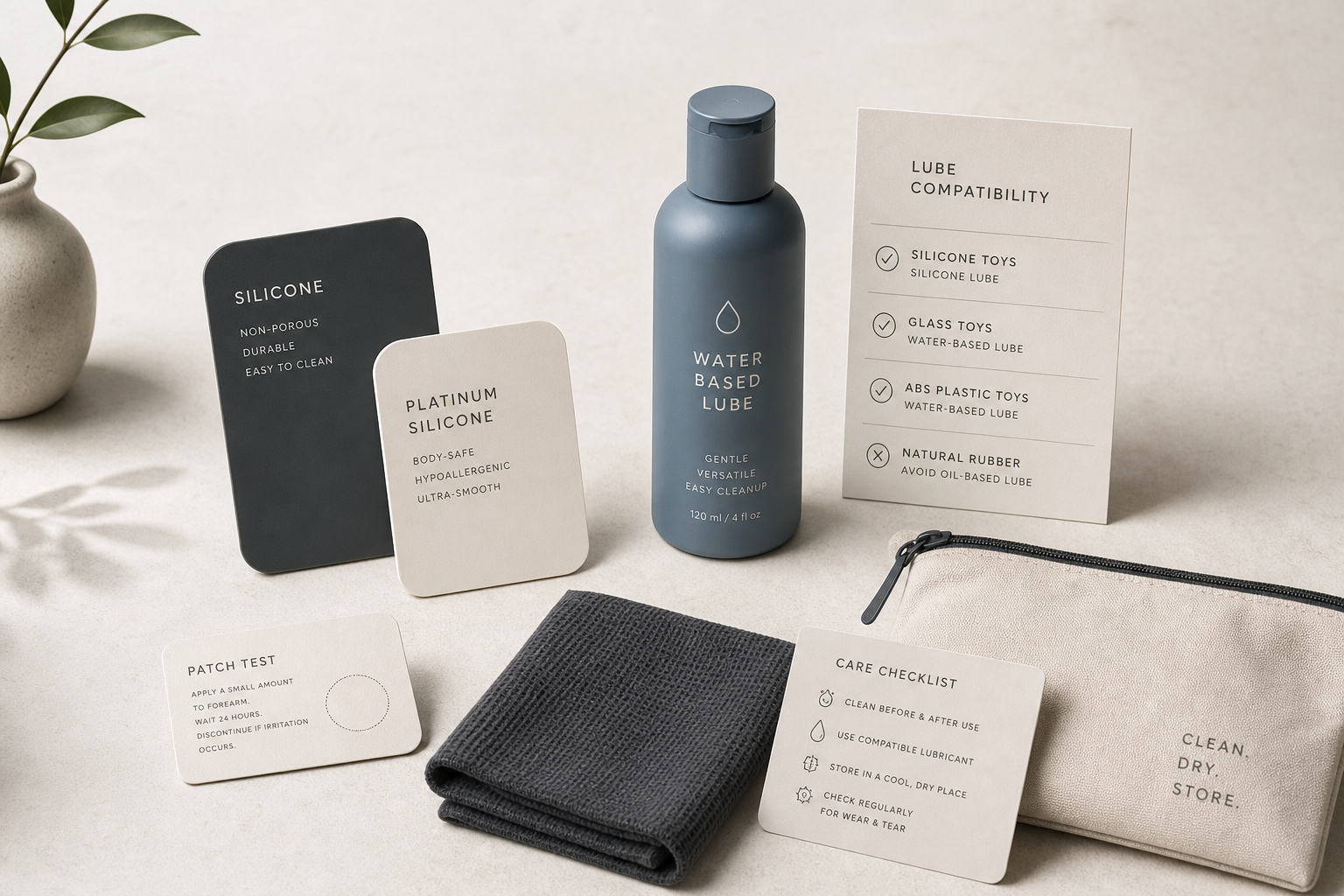
Quick Answer
Do not assume silicone lube is safe for every silicone toy. Some combinations are fine, but others can soften, cloud, swell, or leave a tacky surface. The safest first step is to read the toy label and lubricant label. If either label is unclear, choose a water-based lubricant or ask support before using the products together.
Why this question is more specific than “best lube”
Searches for silicone lube with silicone toys are usually not asking for a generic lubricant recommendation. The shopper already has, or plans to buy, a silicone item and wants to avoid damaging it. That is a material-compatibility question, not a performance promise. Silicone lubricant is valued because it lasts longer than many water-based formulas and does not dry out as quickly. Silicone toys are valued because high-quality silicone can feel smooth, be nonporous when properly made, and clean more predictably than many soft blends.
The issue is that similar chemistry can interact. Depending on the exact formulas, a silicone lubricant may affect a silicone toy surface. The listing may call both products “premium,” but that does not confirm they work together. A useful buying page should answer the ordinary shopper’s real question: will this pairing protect the product I paid for and remain comfortable to clean?
Read both labels before you rely on a patch test
The best answer is not hidden in a forum comment. It should be on the product page, insert card, or support page. Look for a sentence that directly says whether the toy is compatible with silicone lubricant. If the toy maker says to use only water-based lubricant, follow that instruction. If the lubricant page says to avoid silicone toys, take that seriously even if reviews say otherwise.
A patch test can be useful, but only within limits. Test a small hidden area if the manufacturer allows it, wait longer than a few seconds, clean the area, and check it again after drying. Watch for tackiness, swelling, clouding, surface drag, color transfer, or a finish that feels different from the rest of the toy. A patch test does not confirm long-term durability, and it should not override clear manufacturer instructions.
Why water-based lubricant is the simpler default
When the material is unknown or the toy has multiple parts, water-based lubricant is usually the simpler default. It is easier to wash away, easier to pair with many barriers, and less likely to create a silicone-on-silicone compatibility problem. The tradeoff is that it may need to be reapplied more often. That is usually a better inconvenience than damaging a favorite product.
For shoppers comparing “best lube for silicone toys,” the practical answer is often a plain water-based formula with clear ingredients, no numbing claims, and no confusing oil blend. If you have sensitive skin, avoid unnecessary fragrance and warming or cooling additives unless you already know you tolerate them.
Condoms, barriers, and mixed-material products
Condom and barrier compatibility is a separate check. CDC condom resources are a good reminder that labels matter because products are made from different materials. Silicone lubricant is commonly used with latex condoms, while oil-based products can weaken latex. Still, read the exact condom and lube packaging. Do not rely on a single rule when a product uses unusual materials.
Mixed-material toys need extra attention. A toy may have a silicone exterior, ABS controls, metal charging contacts, seams, motors, or a soft sleeve insert. Lubricant can travel into gaps and make cleaning harder. If the listing does not explain the body-contact material and cleaning method, choose a clearer product or contact support.
Cleaning after lubricant use
Silicone lubricant can cling longer than water-based lubricant. That is part of its appeal, but it also means cleanup may require more patience. Follow the toy’s instructions, use mild soap or approved cleaner when allowed, rinse thoroughly, and dry completely before storage. Do not boil, submerge, or use harsh cleaners unless the manufacturer specifically says the product can handle that treatment.
A clean, dry surface is also how you notice problems early. If a toy suddenly feels sticky, collects lint unusually fast, smells different, or develops cloudy patches after lubricant contact, stop using it. CPSC reporting resources exist for consumer product concerns, and seller support should be able to answer material questions without shaming the customer.
Red Flags / when to slow down before checkout
Slow down if a product page says “works with all lubes” but gives no material details. Pause if a silicone toy page hides lubricant compatibility, cleaning directions, warranty limits, or support contact. Be careful with marketplace listings that reuse generic photos and cannot name the body-contact material.
Avoid pages that make medical or performance claims around lubricant. Lubricant can reduce friction and support comfort, but it is not a treatment for pain, anxiety, fertility, erectile function, or any health condition. If discomfort is persistent or severe, a qualified clinician is the right source, not a product page.
Compatibility checklist
| Question | Better sign | Caution sign |
|---|---|---|
| Toy label | Names material and lube compatibility | Only says “premium silicone feel” |
| Lube label | Clear condom and toy notes | No compatibility section |
| Patch test | Allowed and checked after cleaning | Used to ignore maker warnings |
| Checkout | Support and returns are clear | Seller cannot answer basic questions |
FAQ
Can I use silicone lube with silicone toys?
Sometimes, but not automatically. Some silicone lubricants can soften or damage some silicone toy surfaces. Check the toy maker’s instructions first and use water-based lubricant when compatibility is unclear.
Is a patch test enough to prove compatibility?
A patch test can reveal obvious surface changes, but it is not a laboratory assurance. Test a hidden spot only if the manufacturer allows it, then watch for tackiness, swelling, dullness, or texture change.
What lube is safest when I am unsure?
A plain water-based lubricant is usually the easiest default for mixed materials, condoms, and uncertain toy labels.
Will silicone lube damage condoms?
Silicone lubricant is generally compatible with latex condoms, but always check the condom and lube labels. Oil-based products are the common latex concern.
What should I do if a toy becomes sticky?
Stop using it, clean it according to instructions, let it dry, and contact the seller or manufacturer. Do not keep using a surface that feels degraded or leaves residue.
References and useful sources
Shop and learn next
Useful product or support links:
Related ShopLovaNest guides: