Vibrating Kegel Balls Safety Guide
A cautious buyer guide to vibrating kegel balls, covering beginner sizing, weight, retrieval design, body-safe material labels, controls, charging, cleaning, and when to slow down before checkout.
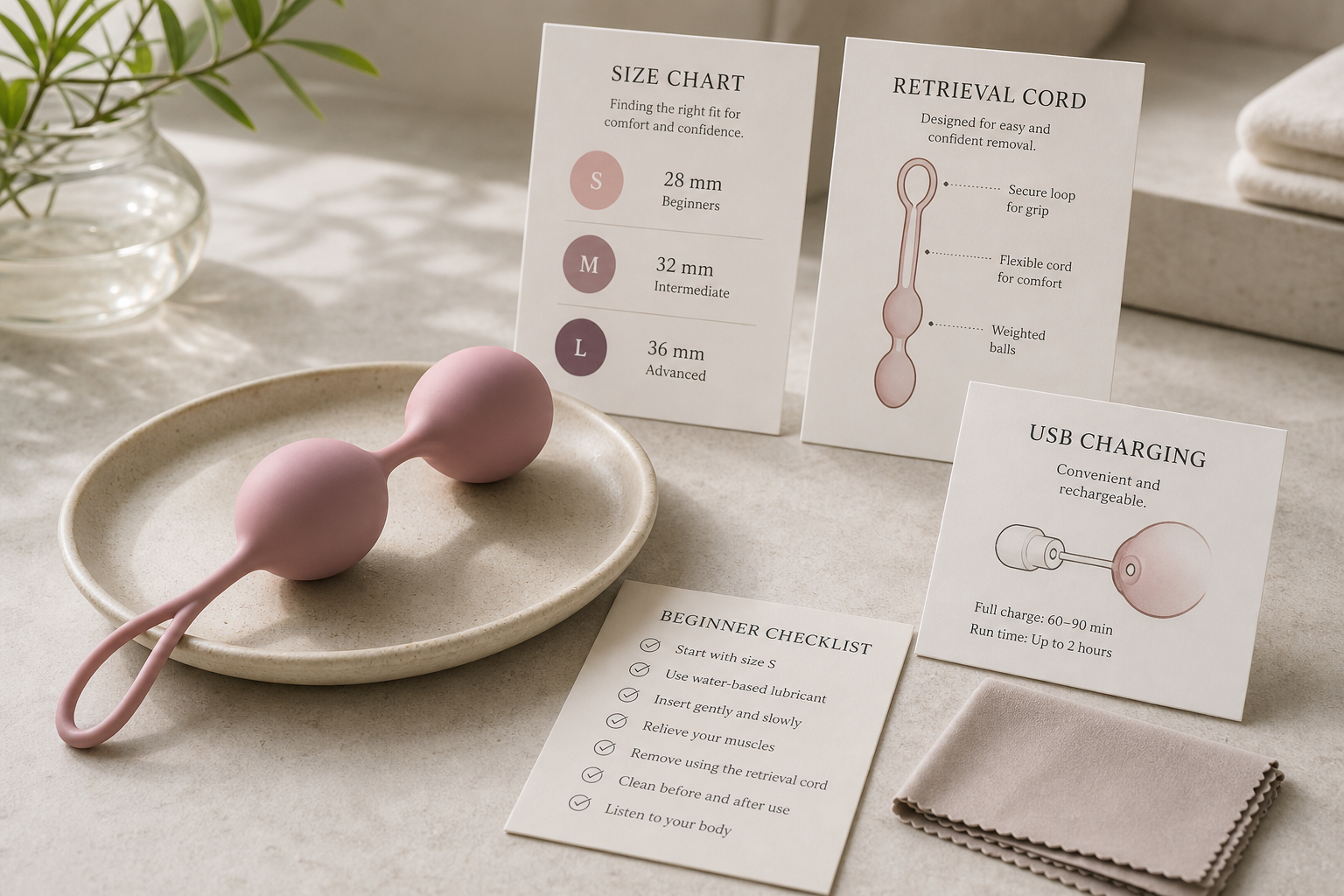
Quick Answer
Vibrating kegel balls should be compared by size, weight, retrieval design, body-contact material, vibration controls, cleaning steps, and charging safety. Choose beginner-friendly sizing before chasing heavier weights or stronger vibration. Avoid listings that promise medical treatment, guaranteed pelvic-floor results, or dramatic performance claims. If there is pain, pelvic health concern, pregnancy-related question, or recovery question, professional guidance matters more than ecommerce copy.
What shoppers mean by vibrating kegel balls
The keyword vibrating kegel balls blends two different interests. One is the traditional kegel-ball shopping question: size, weight, retrieval cord, material, and cleaning. The other is the powered-device question: motor control, battery, charging, sound, and water-resistance limits. A useful buyer guide has to answer both without making medical promises.
Kegel balls are often discussed around pelvic floor exercises, but an online store should be careful. Pelvic floor health is individual. Some people need strengthening, some need relaxation, and some need clinical assessment. That is why this guide frames the product as an adult wellness accessory and shopping decision, not a medical treatment.
Start with size and weight, not vibration strength
Beginners should start with manageable size and weight. A heavier product is not automatically better. A larger product is not automatically easier. Look for actual measurements, total weight, individual ball size, and whether the design is single, double, or connected. If the listing only says beginner friendly without numbers, it is not giving enough information.
Vibration can add sensation, but it does not fix poor fit. Strong modes may sound appealing in product copy, yet simple controls and comfortable retrieval usually matter more in real use. A beginner-friendly product should be easy to insert according to instructions, easy to remove, and easy to stop.
Retrieval design is a safety detail
A retrieval cord, loop, or handle is not a decorative feature. It is part of the safety and comfort plan. The product page should show how the item is removed and whether the retrieval part is flexible, smooth, and securely attached. Avoid vague photos that hide the end of the product.
Do not use products with damaged cords, sharp seams, cracks, loose parts, or unclear removal instructions. If a listing makes retrieval look like an afterthought, slow down. The best product for a cautious shopper is the one that removes predictably and cleans thoroughly.
Material labels and surface quality
Body-contact material should be named clearly. Silicone is a common choice, but shoppers should still look for smooth surfaces, sealed seams, and instructions for compatible lubricants and cleaners. Vague phrases such as soft material or medical grade style are not a substitute for a real material label.
Because vibrating designs contain electronics, water-resistance language matters. Waterproof, water-resistant, and splashproof are not the same. If the charging port, magnetic contacts, or motor housing are exposed, the care instructions should explain exactly what can be rinsed and what must stay dry.
Controls, charging, and noise
Powered kegel balls should list vibration modes, how to change modes, charge time, run time, battery type if relevant, and whether the device has a travel lock. A remote can be useful, but it adds another battery and another privacy detail. App control adds more privacy questions and should be opt-in, transparent, and easy to disable.
Noise is often overlooked. A small motor may be quiet in open air but louder against hard surfaces or in a silent room. If discretion matters, read reviews for shared-home comments and store the product in a pouch so it does not rattle against chargers or other items.
Cleaning and storage habits
Cleaning should happen before and after use according to the product instructions. Look for smooth, nonporous surfaces, minimal seams, and a design that dries fully before storage. Do not charge a damp product. Do not store it in a sealed pouch while moisture remains on the surface.
Use compatible lubricant. Water-based lubricant is often the safest default for many silicone products, while silicone lubricant can conflict with some silicone surfaces. If the product page does not address lubricant compatibility, ask support or choose a clearer listing.
Health-claim boundaries
Reliable external health resources discuss pelvic floor exercises, but they do not mean every weighted or vibrating product is right for every body. Avoid ecommerce claims that promise to cure leakage, treat pain, tighten the body, improve fertility, or replace pelvic floor therapy. Those claims are too broad and can be misleading.
If someone has pelvic pain, numbness, bleeding, recent surgery, pregnancy or postpartum questions, prolapse symptoms, urinary problems, or uncertainty about whether strengthening is appropriate, a clinician or pelvic floor specialist is a better source than product marketing.
Red Flags / when to slow down before checkout
Pause if there is no size chart, no weight listed, no retrieval design shown, no body-contact material label, no cleaning instructions, or no explanation of charging limits. Slow down if the copy promises medical outcomes, uses shame-based language, or treats stronger vibration as automatically better.
Be cautious with copied photos, missing support contact, unclear returns, and reviews that mention difficult removal, cracked seams, odor after cleaning, weak charging, or confusing controls. A responsible listing should be calm, specific, and easy to verify.
Buyer checklist for vibrating kegel balls
| Check | Better sign | Caution sign |
|---|---|---|
| Fit | Size and weight listed in numbers | Only says beginner or advanced |
| Retrieval | Smooth cord, loop, or handle shown | Removal design hidden |
| Power | Controls, charge time, and care limits clear | Mystery charger or vague waterproof claim |
| Claims | Accessory language with cautious guidance | Medical or guaranteed-result promises |
FAQ
What are vibrating kegel balls?
They are weighted adult wellness accessories with a vibration feature. Product pages should focus on size, weight, retrieval, material, cleaning, and controls rather than guaranteed health outcomes.
Are vibrating kegel balls good for beginners?
Some can be beginner-friendly if they are small enough, light enough, easy to retrieve, and simple to clean. Beginners should avoid heavy or complicated designs.
Do they provide medical pelvic floor treatment?
Do not treat ecommerce products as medical treatment. Pelvic floor concerns, pain, pregnancy-related questions, or recovery questions should be discussed with a qualified clinician.
What material should I look for?
Look for clearly named body-contact material such as silicone, smooth construction, and cleaning instructions. Vague soft-touch wording is not enough.
What red flags matter most?
Missing retrieval design, no size or weight information, unsupported medical claims, unclear charging limits, and no cleaning instructions are major caution signs.
References and useful sources
Shop and learn next
Useful product or support links:
Related ShopLovaNest guides: