Waterproof Vibrator Ratings & Cleaning
A practical buyer-safety guide to waterproof vibrator language, IP ratings, rinsing limits, charging-port care, cleaning routines, and red flags before checkout.
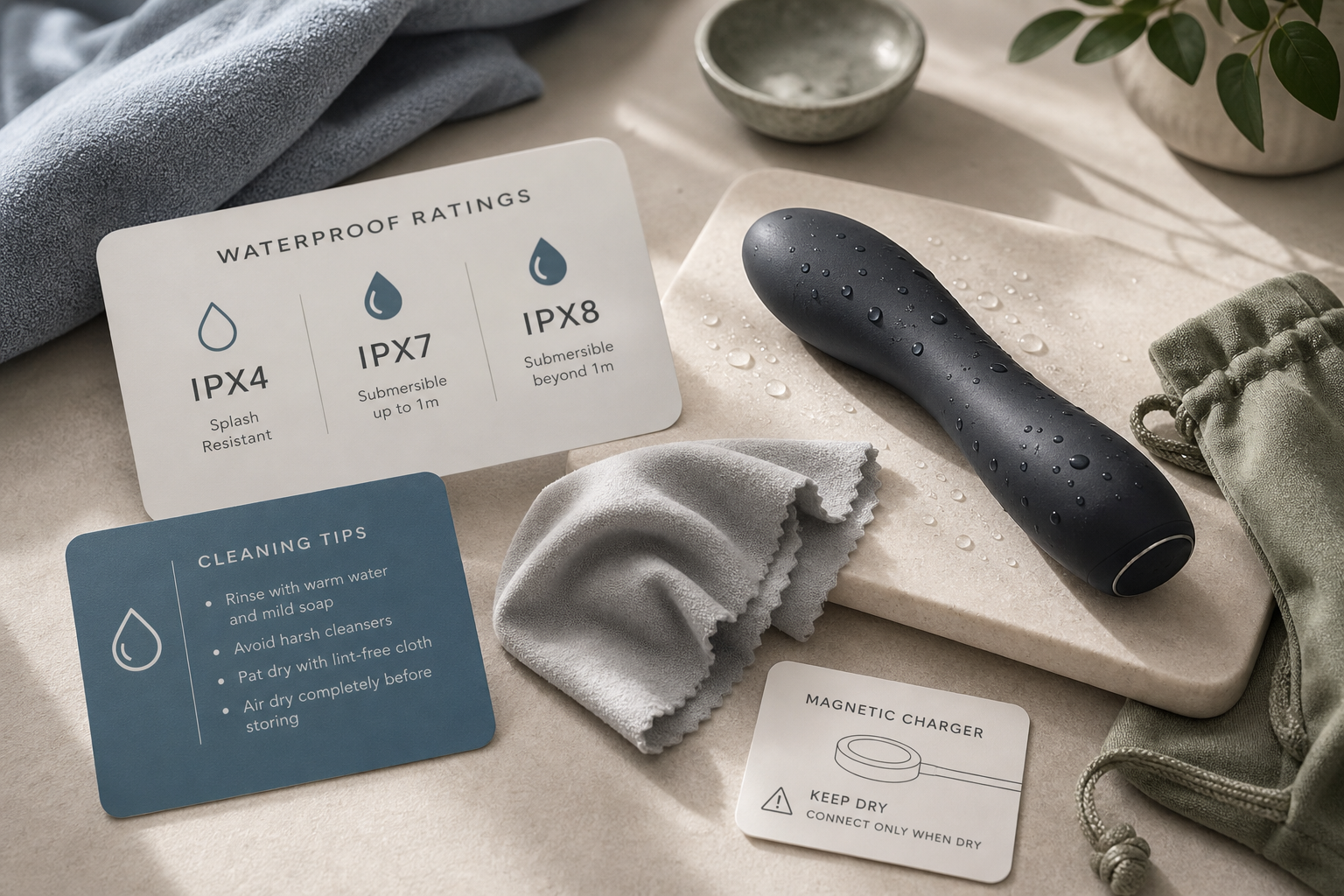
Quick Answer
A waterproof vibrator claim is useful only when the seller explains the actual water limit. Look for specific IP language, clear cleaning steps, charging-contact warnings, and instructions for drying before storage. View vague “100% waterproof” copy as a reason to slow down, especially on rechargeable products with seams, buttons, or magnetic charging pins.
Waterproof language needs specifics
Waterproof vibrator searches usually come from a practical question: can this product be rinsed, cleaned, or used around water without damage? The answer depends on design. A sealed silicone-coated device may handle a quick rinse, while a remote, charging cable, travel case, or open charging port may not. A responsible product page should separate the device body from accessories and explain each limit.
Marketing often compresses several ideas into one word. Splash-resistant can mean protection from small amounts of water. Water-resistant can mean limited exposure. Waterproof may still have time, depth, temperature, or charging restrictions. IEC ingress protection resources are helpful because they show why standardized ratings are more meaningful than a decorative water icon.
How to read IP ratings without overthinking them
IP ratings use two digits. The first relates to solids and dust; the second relates to water. For shoppers, the water digit is usually the important part, but even a higher rating does not replace the care manual. A product may be tested under controlled conditions that do not match soap, hot water, bath oils, pressure, or long soaking.
If a listing mentions an IP rating, read the whole sentence. Does it apply to the entire device or only the sealed motor body? Are buttons, seams, and magnetic contacts included? Is the remote included? If the listing only says waterproof in a headline and never repeats the detail in the manual or care section, view the claim as incomplete.
Cleaning after use: rinse, wipe, dry, store
Cleaning should be simple and repeatable. Power the device off. Remove it from the charger. Use the method the manufacturer allows: wiping, careful rinsing, or fuller washing. Pay attention to seams, buttons, texture, and the area around charging contacts. Avoid harsh household cleaners because they may damage coatings or leave residues.
Drying is not optional. Moisture left around a seam can create odor, residue, or charging problems. Pat dry with a clean lint-free cloth, then air-dry before closing a pouch or drawer. Store the device away from heat, lint, incompatible soft materials, and loose metal objects that could touch charging pins.
Rechargeable devices need extra charger care
Rechargeable products are convenient, but water and charging do not mix. Magnetic pins can collect residue, charging holes can trap moisture, and small indicator lights may be difficult to inspect. Do not charge immediately after cleaning unless the manual says it is safe. If the product feels unusually warm, smells odd, will not charge, or shows corrosion around contacts, stop using the charger and contact support.
For travel, a lock mode and dry storage pouch can be as important as water resistance. Keep the cable separate from damp items. If you pack the device after cleaning, make sure both the product and the pouch are fully dry.
Red Flags / when to slow down before checkout
Pause if a listing says waterproof but gives no IP rating, no cleaning steps, no charging-contact warning, and no support contact. Slow down if reviews mention water damage after normal rinsing, failing buttons, loose seams, rust-colored marks, sticky coatings, or confusing manuals. Be skeptical of sellers that use water claims to imply medical, therapeutic, or guaranteed performance benefits.
FTC online-shopping guidance applies to warranties, seller identity, returns, and support. CPSC resources can help consumers report safety issues. For everyday shopping, your best protection is a product page that explains limits plainly before you buy.
Water claim comparison checklist
| Claim | Better sign | Caution sign |
|---|---|---|
| Waterproof | Specific IP or care language | Headline-only promise |
| Cleaning | Seams, buttons, and contacts addressed | Only says “easy clean” |
| Charging | Dry-before-charging warning | No charger guidance |
| Accessories | Remote and cable limits separated | Accessories treated as waterproof too |
FAQ
Are all vibrators waterproof?
No. Some are splash-resistant, some are water-resistant, and some are designed for fuller water exposure. The product page or manual should explain the limit clearly.
What does an IP rating tell me?
An IP rating is a standardized way to describe dust and water protection. It is more useful than vague waterproof language, but you still need the maker’s cleaning directions.
Can I rinse a rechargeable vibrator?
Only when the manufacturer says the body can be rinsed. Charging contacts, seams, remotes, and cases may have different limits than the main device.
Is waterproof the same as safe for bath use?
Not always. Bath use, shower spray, brief rinsing, and submersion are different conditions. Follow the specific instructions for the product.
What should I do before charging after cleaning?
Dry the device fully, especially around seams and charging contacts. Do not connect a charger while the product is damp unless the manual explicitly allows it.
References and useful sources
Shop and learn next
Useful product or support links:
Related ShopLovaNest guides: