Sensitive Skin Lube Shopping Guide
A plain-English sensitive skin lube guide that explains ingredient labels, glycerin-free and water-based options, condom and toy compatibility, pH/osmolality basics, patch testing, and cautious checkout decisions.
Quick Answer
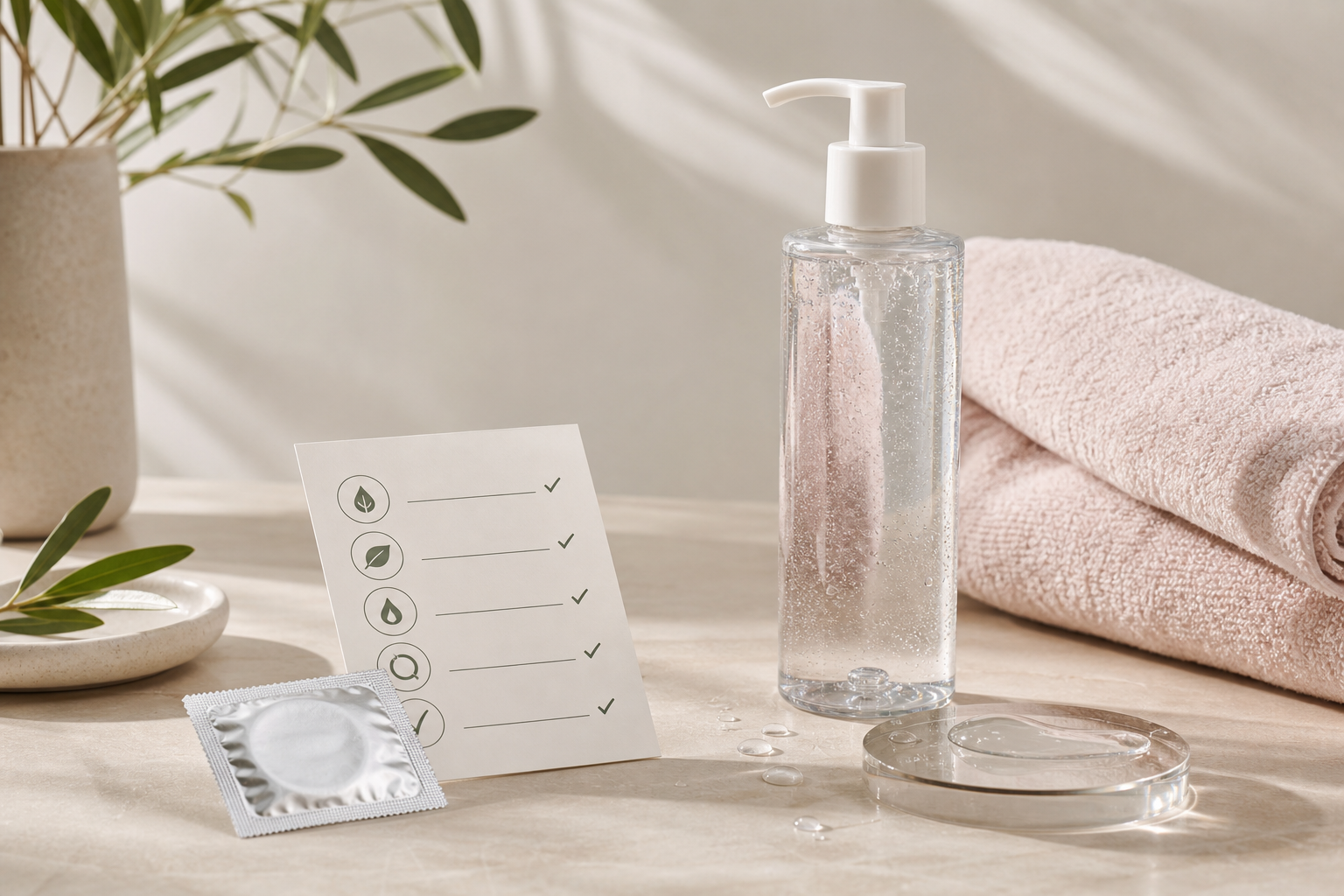
For sensitive skin, choose lubricant by reading the ingredient list, not by trusting words like “natural” or “hypoallergenic” alone. Start with fragrance-free, clearly labeled products; confirm condom and toy compatibility; consider glycerin-free water-based formulas when irritation is a concern; and stop using anything that stings, burns, or causes unusual symptoms.
What sensitive skin shoppers are really trying to solve
Sensitive skin lube searches often come from a practical problem: a product felt sticky, caused stinging, irritated skin, damaged a toy, or did not work with condoms. The goal is not to diagnose a medical issue online. The goal is to choose a lower-risk product page and know when to slow down.
No lubricant can promise zero irritation for everyone. Bodies, products, and situations vary. A careful buyer looks for clear ingredients, compatibility statements, and realistic instructions. If irritation is frequent, severe, or unexplained, a qualified clinician is a better source than a product listing.
Ingredient labels in plain English
Fragrance, flavoring, warming agents, cooling agents, dyes, and certain preservatives can be more noticeable for sensitive shoppers. That does not make every ingredient bad, but it does mean the label should be easy to find before checkout. Avoid products that hide the ingredient list or use vague “proprietary blend” language for body-contact formulas.
“Natural” is not the same as gentle. A botanical extract can still bother some people. “Hypoallergenic” is also not a guarantee. Treat these words as starting points, then check the full label and the return policy.
Water-based, silicone-based, and toy compatibility
Water-based lube is popular because it is easy to wash off and widely compatible with many condoms and toys. It may dry faster than silicone formulas, so reapplication can be normal. Silicone lube often lasts longer and handles water better, but it may not be compatible with silicone toys unless the manufacturer clearly says so.
If you are buying lube for toys, read both labels: the lube label and the toy care instructions. When in doubt, water-based lubricant is usually the safer default for silicone toys. For condoms or barriers, follow FDA and CDC guidance and use products that state condom compatibility.
pH and osmolality without the jargon
Some lubricant discussions mention pH and osmolality. In plain terms, these describe how a product’s chemistry may compare with body tissues. The World Health Organization has published technical guidance discussing lubricant pH and osmolality for sexual-health programs. Shoppers do not need to memorize numbers, but the concept supports a useful habit: choose products that provide more information rather than less.
If a product page discusses pH or osmolality, look for cautious wording and context. Avoid brands that turn technical terms into exaggerated health promises.
Patch testing and first-use caution
For sensitive skin, consider testing a small amount on external skin first and waiting to see whether irritation appears. This is not a medical guarantee, but it can help you notice obvious discomfort before using more product. Do not test on broken or inflamed skin.
Use a small amount at first, keep the product away from eyes, and stop if it stings or burns. If symptoms are severe, persistent, or unusual, get professional advice rather than trying multiple new formulas in a row.
Condoms, barriers, and safety basics
Compatibility matters because the wrong lubricant can weaken certain barriers. Oil-based products can damage latex condoms. Many water-based and silicone-based lubricants are designed for condom use, but the package should say so. FDA and CDC consumer resources are useful references for barrier basics.
Do not assume a lube is condom-compatible because it is sold in an adult store. Check the label. If the page does not mention condoms and you plan to use condoms, choose a clearer product.
Red Flags / when to slow down before checkout
Pause if the ingredient list is missing, the product relies on “natural” without details, or the page makes medical claims about infections, fertility, hormones, or treatment. Slow down if reviews repeatedly mention burning, strong fragrance, sticky residue, damaged toys, or leaking packaging.
Avoid products that do not state condom compatibility when you need it, or toy compatibility when you are buying for silicone toys. A sensitive-skin purchase should feel transparent, not mysterious.
Comparison checklist
| Check | Better sign | Caution sign |
|---|---|---|
| Ingredients | Full label shown clearly | Vague blend or hidden label |
| Claims | Cautious comfort language | Medical or treatment claims |
| Compatibility | Condom and toy notes included | No barrier or toy guidance |
| Sensitivity | Fragrance-free or glycerin-free options explained | Heavy scent or warming hype |
FAQ
Is water-based lube best for sensitive skin?
It is often a practical first option because it is widely compatible, but the ingredient list matters more than the water-based label alone.
Does hypoallergenic mean irritation-proof?
No. Hypoallergenic is not a guarantee. It usually means the brand is trying to reduce common irritants, but individual reactions can still happen.
Should I avoid glycerin?
Some sensitive shoppers prefer glycerin-free formulas. If irritation is a concern, compare ingredient lists and consider asking a qualified clinician for personal guidance.
Can I use silicone lube with silicone toys?
Usually you should avoid silicone lubricant with silicone toys unless the toy maker says it is compatible. Water-based lube is often the safer toy-compatible default.
What should I do if a lube stings or burns?
Stop using it, wash the area gently as appropriate, and seek professional medical advice if symptoms are severe, persistent, or concerning.
References and useful sources
Shop and learn next
Useful product or support links:
Related ShopLovaNest guides: