Silicone Anal Lube Safety Guide
A practical buyer guide to silicone anal lube, focused on condom compatibility, toy-material conflicts, cleanup, texture, ingredient transparency, packaging, and checkout red flags.
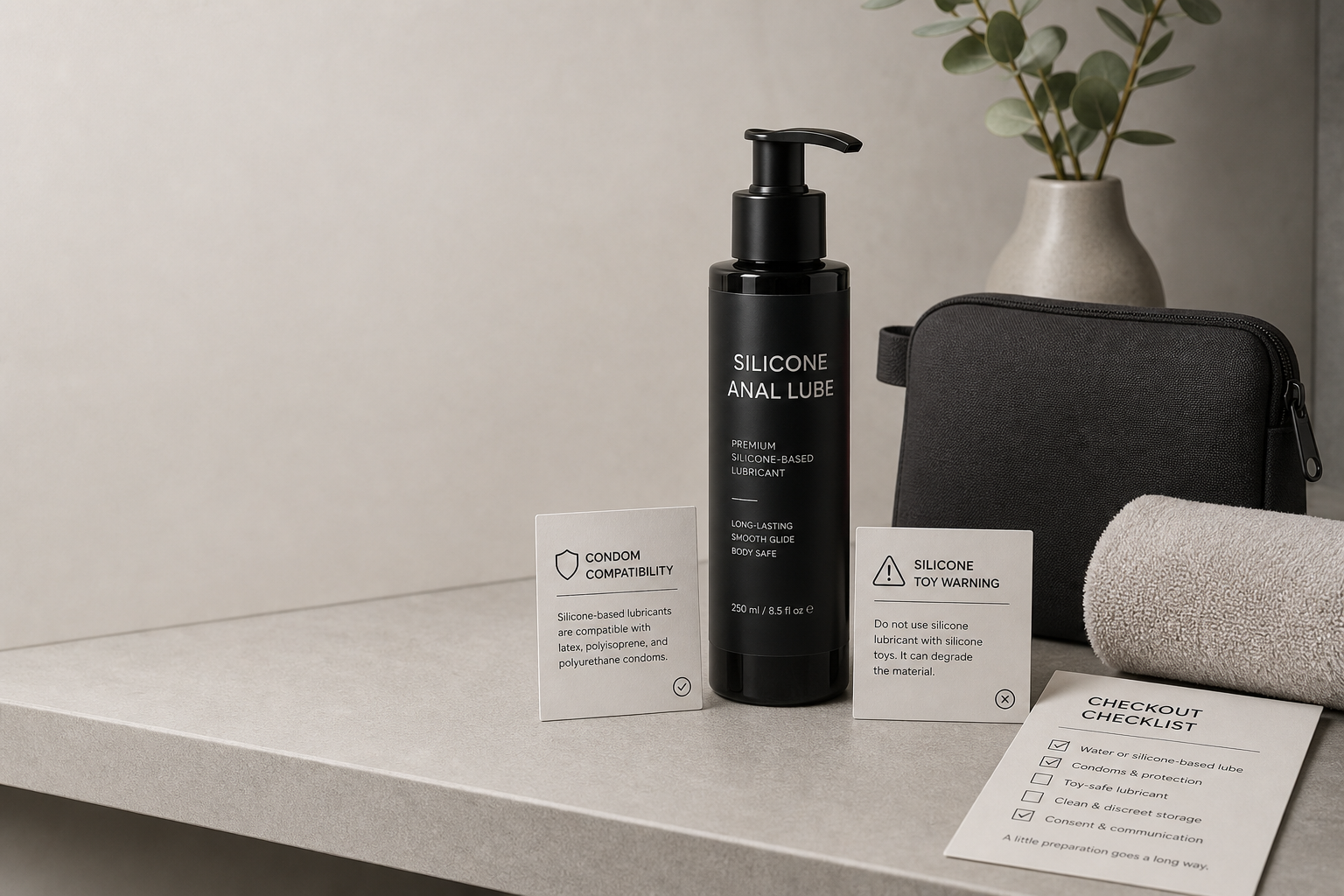
Quick Answer
Silicone anal lube is often chosen because it stays slick longer than many water-based formulas, but the buying decision should start with compatibility. Check whether the label supports latex condoms, avoid using it on silicone toys unless the maker confirms it is safe, read the ingredient list, and make sure cleanup expectations are realistic. Slow down before checkout if the listing promises medical benefits, hides ingredients, or treats all toys and condoms as universally compatible.
Why this keyword needs a careful answer
The phrase silicone anal lube has a clear shopping intent, but it also carries real compatibility questions. Anal use generally needs generous lubrication and a formula that does not dry out too quickly. Silicone lubricant can be appealing for that reason, yet it is not a universal answer. The same long-lasting texture that many shoppers like can create problems with some toy materials and can take more effort to wash from fabric or surfaces.
A useful ecommerce guide should not rely on explicit language or exaggerated claims. It should help adults compare labels, understand material limits, and recognize when a simpler water-based formula may be a better match. If a product page does not answer those practical questions, the shopper is left guessing at the exact moment when precision matters.
Condom compatibility comes first
If condoms are part of the plan, compatibility is the first checkout detail. Many silicone lubricants can be used with latex condoms, but shoppers should verify that on the lubricant label and follow the condom instructions. Do not assume compatibility because a bottle says premium, long lasting, or personal lubricant. Those words do not replace clear label guidance.
Oil-based products can weaken latex condoms, which is why labels matter. Silicone formulas are different from oils, but a responsible seller should still explain condom compatibility in plain language. If the listing avoids the topic entirely, choose a clearer product or ask support before buying. Planned Parenthood, CDC, and FDA condom information are useful background resources, but the product label remains the specific source for the item in your cart.
Silicone toys need extra caution
The most common silicone-lube mistake is using it with silicone toys without checking compatibility. Some silicone lubricants can interact with some silicone toy surfaces, leaving them tacky, cloudy, swollen, or damaged. The risk depends on the formulation and the toy material, so broad claims are not helpful.
If the toy is silicone, water-based lube is usually the safer default unless the toy manufacturer and lubricant maker both say the pairing is acceptable. Patch tests are sometimes mentioned online, but they are not a perfect substitute for manufacturer guidance. For shoppers who own many silicone products, toy compatibility may matter more than how long the lubricant lasts.
Texture, staying power, and cleanup
Silicone formulas are known for staying slick because they do not evaporate the way water-based products can. That can reduce the need for frequent reapplication, which is one reason shoppers search for silicone-based anal lube. The tradeoff is cleanup. Silicone lube can cling to skin, towels, bedding, and bathroom surfaces longer than water-based formulas.
Look for listings that describe texture without overpromising. Words such as cushiony, thin, gel-like, or ultra-slick can help, but ingredient transparency and compatibility matter more. If you dislike residue or need simple cleanup, compare with water-based anal lube before buying.
Ingredients and sensitivity expectations
A product page should list ingredients clearly and avoid unsupported health claims. Lubricants are personal products, and bodies vary. A formula that works well for one adult may not suit another. Fragrance, warming additives, numbing language, or vague botanical claims deserve extra attention, especially for sensitive shoppers.
Avoid products that promise to heal, treat pain, prevent infections, improve fertility, or solve medical conditions. Those are not responsible ecommerce promises. If someone has ongoing discomfort, bleeding, severe irritation, or medical questions, a qualified clinician is more appropriate than a product page.
Packaging, storage, and discreet shipping
Silicone lube packaging should be practical: a cap that closes tightly, a bottle that does not leak easily, a size that matches expected use, and storage directions that are easy to follow. Because silicone can make surfaces slippery, controlled dispensing matters. Pumps, flip caps, and travel caps each have different privacy and spill risks.
Discreet shoppers should also check billing, packaging, and returns. A good store does not need embarrassing copy to sell a personal-care product. It should explain shipping and support in calm language and make it easy to ask compatibility questions before checkout.
Red Flags / when to slow down before checkout
Pause if the listing does not show ingredients, does not mention condom compatibility, claims to work with every toy material, or promises medical benefits. Slow down if it uses numbing or extreme-performance language without clear safety instructions. Be cautious when reviews mention burning, staining, leaking caps, damaged silicone toys, or impossible returns.
A trustworthy listing is usually specific rather than dramatic. It names ingredients, explains compatible uses, avoids cure-like claims, gives cleanup and storage guidance, and provides a support path for private questions.
Buyer checklist for silicone anal lube
| Check | Better sign | Caution sign |
|---|---|---|
| Condoms | Latex compatibility clearly stated | No condom guidance |
| Toys | Silicone-toy limits explained | Claims safe for every material |
| Ingredients | Full list and plain directions | Vague premium formula wording |
| Cleanup | Storage and washing expectations noted | No care instructions |
FAQ
Is silicone anal lube safe to use with condoms?
Many silicone lubricants are compatible with latex condoms, but the product label should say so clearly. Do not guess from marketing copy; check the lubricant and condom instructions.
Can silicone anal lube be used with silicone toys?
Usually you should avoid pairing silicone lubricant with silicone toys unless both manufacturers confirm compatibility. Silicone lube can damage or tack up some silicone toy surfaces.
Why do people choose silicone anal lube?
Shoppers often choose it because it tends to last longer and evaporates less quickly than water-based lube. That does not make it right for every toy, condom, or skin preference.
Is thicker always better?
No. A thicker texture can feel more cushioned, but comfort also depends on ingredients, amount used, cleanup, and personal sensitivity.
What should I do if irritation happens?
Stop using the product, wash the area gently, and avoid reapplying. Seek qualified care for severe, lasting, or worrying symptoms.
References and useful sources
Shop and learn next
Useful product or support links:
Related ShopLovaNest guides: