Natural Water-Based Lube Guide
A practical buyer guide to natural water-based lube claims, focused on ingredient transparency, condom and toy compatibility, sensitive-skin caution, preservatives, cleanup, and misleading green marketing.
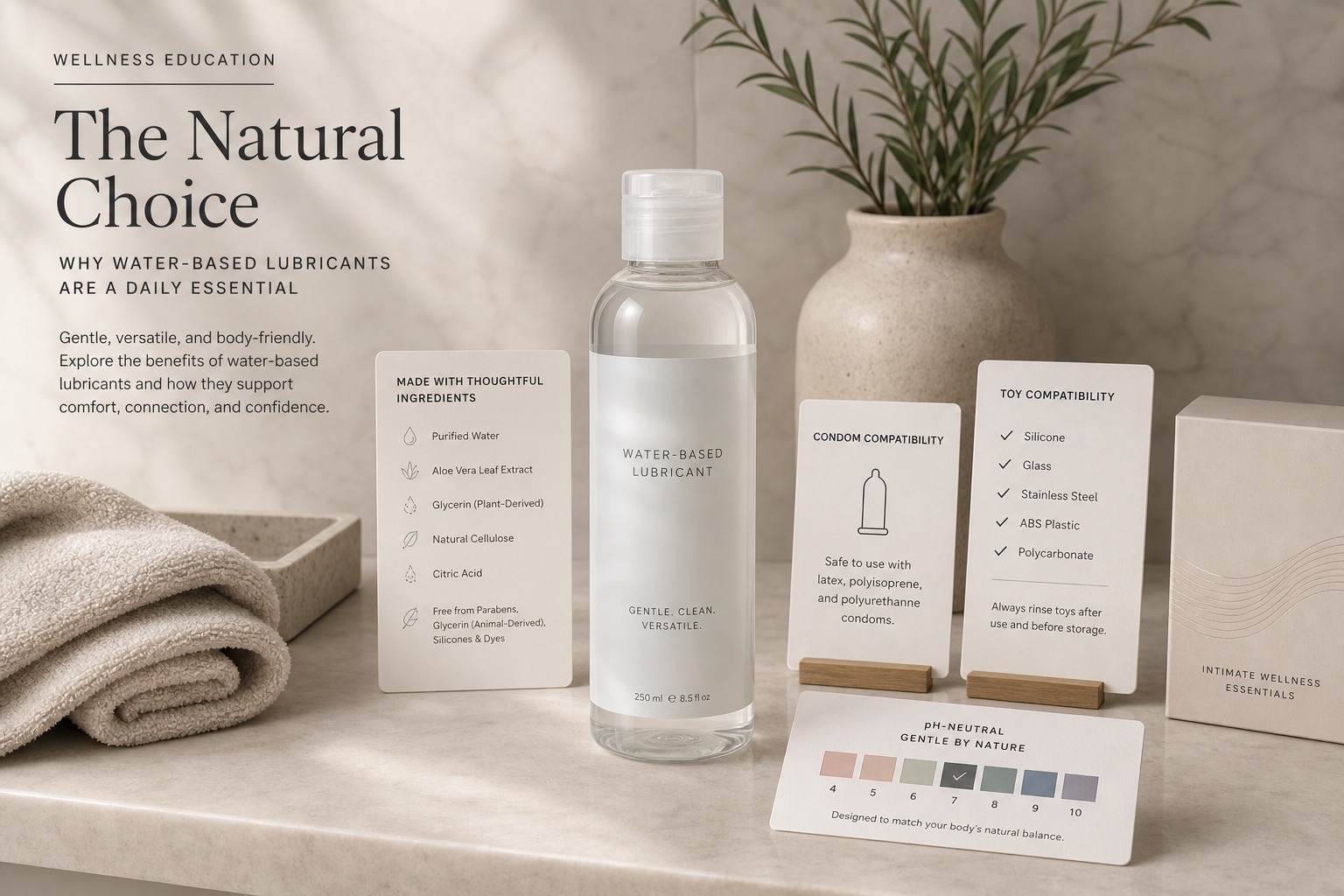
Quick Answer
Natural water-based lube should be judged by its full ingredient list, condom and toy compatibility, preservative system, texture, cleanup, and seller transparency. The word natural does not guarantee a gentler, safer, or more effective product. Choose listings that explain materials plainly, avoid cure-like claims, and give clear directions. Slow down before checkout if ingredients are hidden, the copy implies medical benefits, or green language replaces real compatibility information.
Why natural claims need a closer look
Searches for natural water-based lube usually come from a sensible place. Shoppers want something comfortable, easy to clean, and less intimidating than products with loud performance copy. The problem is that natural is not a complete safety description. A formula can use plant-derived ingredients and still contain preservatives, fragrance, sweeteners, warming agents, or texture modifiers that do not suit every body.
A practical buying decision starts with specifics. What are the ingredients? Is the product labeled for condom compatibility? Does it work with the toys you own? Does the bottle explain cleanup and storage? Those answers matter more than soft green packaging or vague purity language.
Ingredient transparency beats buzzwords
A trustworthy listing should show the full ingredient list in readable text or a clear product photo. Water, humectants, thickeners, pH adjusters, and preservatives may all appear in a water-based formula. That does not make the product bad; it simply means the shopper needs enough information to decide whether the formula fits their preferences.
Be cautious with phrases like chemical free, toxin free, doctor inspired, or pure pleasure when the listing does not explain the formula. Everything physical is made of chemicals, and personal-care products need clear labels rather than fear-based copy. If a seller wants trust, it should make the ingredient panel easy to find before purchase.
Condom and toy compatibility
Many water-based lubricants are compatible with latex condoms, which is one reason they are a common default. Still, compatibility should be stated on the product label. Planned Parenthood and FDA resources are useful background reading, but the bottle and condom instructions are the specific guidance for the items being used together.
Water-based lube is also often the safer first choice for silicone toys because it is less likely than silicone lubricant to affect silicone surfaces. That does not remove the need for directions. If a toy has a special coating, motor housing, charging port, or cleaning limit, follow the toy maker’s care instructions.
Sensitive-skin expectations
Sensitive-skin shoppers usually want shorter labels, fragrance-free wording, and no dramatic warming, cooling, numbing, or flavor claims. Those preferences are reasonable, but no ecommerce page can guarantee that a formula will suit every person. Bodies vary, and even familiar ingredients can bother someone.
For a cautious first use, start with a small amount, avoid layering multiple new products at once, and stop if discomfort occurs. Do not use a product page as medical guidance. Persistent irritation, pain, bleeding, unusual discharge, or allergy concerns deserve qualified care rather than another checkout attempt.
Preservatives and shelf life are not automatically bad
Because water-based products contain water, they usually need a preservation system to remain stable after manufacturing and opening. A preservative-free claim may sound appealing, but shoppers should ask how the product remains safe to store and use as directed. The better question is whether the preservative system is clearly disclosed and whether the shelf-life directions are realistic.
Check the expiration date, storage advice, cap design, and whether the bottle can be closed cleanly. A formula that spills, separates, smells different after opening, or has unclear storage instructions is not a good private-care purchase, no matter how natural the label looks.
Texture, cleanup, and practical use
Water-based formulas vary from thin and slippery to cushiony and gel-like. Natural-positioned products sometimes feel lighter, but that is not guaranteed. If the listing has reviews, look for practical comments about tackiness, reapplication, residue, and whether the product rinses away easily.
Cleanup is one of the main reasons shoppers choose water-based lube. It usually washes from skin and many fabrics more easily than silicone formulas, but dyes, fragrance, and thickening systems can change the experience. Product pages should set realistic expectations instead of promising a perfect feel for everyone.
Red Flags / when to slow down before checkout
Pause if the product hides its ingredient list, uses medical or infection-prevention promises, claims to be safe for every body and every toy, or relies on green packaging without specific details. Slow down if the listing says chemical free, allergy proof, pH perfect, or doctor approved without context and verifiable information.
Also be cautious with unclear returns, no support contact, copied product photos, missing expiration details, or reviews that mention burning, leakage, separation, or damaged packaging. A good listing is calm, specific, and easy to compare.
Buyer checklist for natural water-based lube
| Check | Better sign | Caution sign |
|---|---|---|
| Ingredients | Full list is easy to read | Only says natural or pure |
| Compatibility | Condom and toy guidance is clear | Universal-safe claim with no details |
| Sensitivity | Fragrance and additives disclosed | Allergy-proof or medical promises |
| Storage | Expiration and cap directions shown | No shelf-life or cleanup guidance |
FAQ
What does natural water-based lube mean?
It is a marketing phrase, not a single regulated formula. Read the ingredient list, compatibility notes, preservatives, and warnings rather than relying on the word natural alone.
Is natural water-based lube always better for sensitive skin?
No. Sensitive shoppers may prefer simple formulas, but plant-derived or naturally described ingredients can still irritate some people. Patch testing and cautious first use are sensible.
Can water-based lube be used with condoms?
Many water-based lubricants are compatible with latex condoms, but the product label should say so clearly. Follow both the condom and lubricant directions.
Is it safe with silicone toys?
Water-based lube is often the safer default for silicone toys, but you should still check the toy and lubricant instructions for compatibility and cleaning guidance.
Should I avoid preservatives?
Not automatically. Water-based formulas usually need a preservation system. The key is transparent labeling and a formula that suits your sensitivity profile.
References and useful sources
Shop and learn next
Useful product or support links:
Related ShopLovaNest guides: